
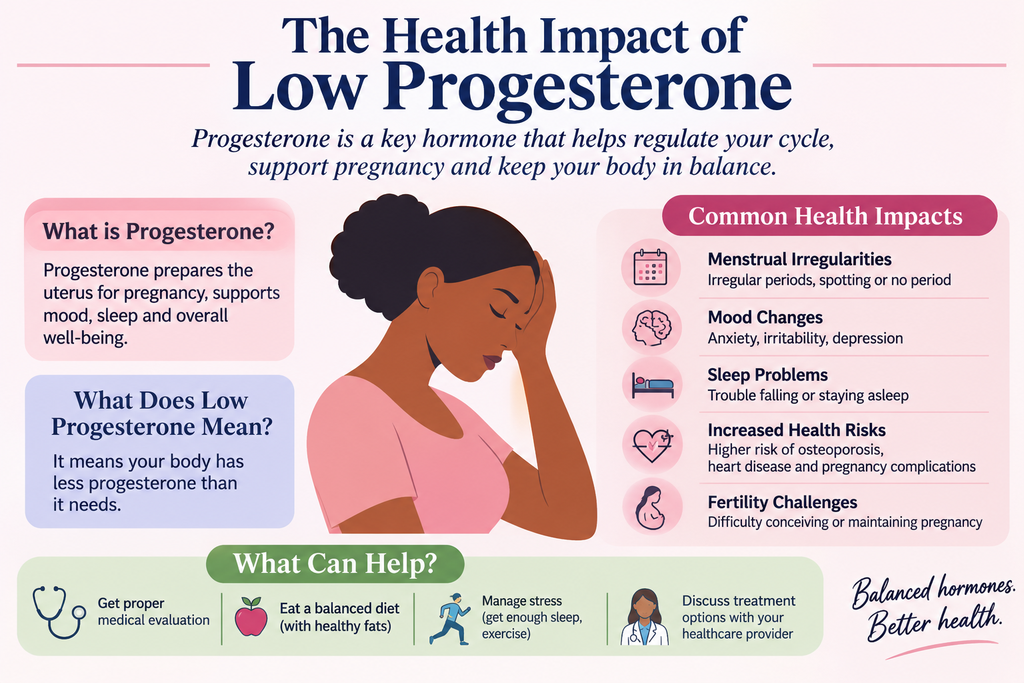
Progesterone is mainly produced by the ovaries after ovulation (by the corpus luteum), and by the placenta during pregnancy. Its main jobs are preparing and maintaining the uterine lining, supporting early pregnancy, and balancing estrogen’s effects. When it runs low, the effects show up in a few areas.
Menstrual and reproductive health
- Irregular or absent periods: low progesterone often means ovulation isn’t happening regularly (anovulation), which is common in PCOS, perimenopause, thyroid problems, high stress, very low body weight, or intense exercise.
- Heavy or prolonged bleeding and spotting: without progesterone to stabilize it, the uterine lining can build up and shed unevenly.
- Short luteal phase: the time between ovulation and the period can be too short for an embryo to implant well.
- Fertility problems and early miscarriage: progesterone keeps the uterine lining receptive and supports the pregnancy until the placenta takes over (around weeks 8–10). Low levels are linked to difficulty conceiving and some early pregnancy losses. In people with a history of early bleeding and miscarriage, progesterone treatment has shown some benefit. For preterm birth risk, vaginal progesterone is used in some high-risk pregnancies.
Estrogen dominance effects
When progesterone is low relative to estrogen, estrogen goes unopposed. This can contribute to:
- Breast tenderness, bloating, and worse PMS
- Fibroids and endometriosis symptoms
- Endometrial hyperplasia: long-term unopposed estrogen thickens the uterine lining, which raises the risk of endometrial cancer. This is the most serious long-term concern. It’s why chronic anovulation (for example, untreated PCOS) and estrogen-only hormone therapy in someone with a uterus are taken seriously.
Mood, sleep, and the nervous system
Progesterone’s breakdown product, allopregnanolone, has a calming effect on the brain. Low or falling levels are associated with anxiety, irritability, low mood, and poor sleep. This is part of why PMDD and perimenopausal mood changes happen, though sensitivity to hormone changes often matters more than the absolute level.
Other possible effects
- Headaches or migraines that track with the cycle
- Hot flashes and night sweats around perimenopause (alongside estrogen changes)
- Bone health: progesterone may support bone formation, but estrogen matters much more here.
In men
Men make small amounts of progesterone as a building block for testosterone and cortisol. Low levels in men aren’t typically a distinct clinical problem.
Diagnosis and treatment
Progesterone varies across the cycle, so a single test only means something with the right timing. The usual test is a blood draw about 7 days after ovulation (around day 21 of a 28-day cycle). Treatment depends on the cause and the goal: fertility support, regulating cycles, protecting the uterine lining, or managing menopause symptoms. Options include oral micronized progesterone, vaginal progesterone, synthetic progestins (in birth control pills or a hormonal IUD), and treating underlying causes like thyroid disease or PCOS.
If you’re noticing symptoms like irregular or heavy periods, spotting, or trouble conceiving, a gynecologist or reproductive endocrinologist can test at the right point in your cycle and look for the underlying cause. I’m happy to go deeper on any part of this, such as perimenopause, fertility, or PCOS.