
When it comes to oral health, most of the heavy lifting doesn’t happen in the dentist’s chair—it happens in your bathroom. According to the American Dental Association (ADA), the average person spends about two hours a year at the dentist, but a staggering 30 hours a year brushing and cleaning their teeth at home.
Because your at-home routine does the heavy lifting, getting it right is crucial. But with so much conflicting advice on social media, how do you know what actually works?
We’ve compiled the ultimate, evidence-based guide to dental care, drawing directly from the latest guidelines from the ADA and the Centers for Disease Control and Prevention (CDC). Whether you’re looking to upgrade your daily routine or just want to ensure you’re protecting your smile, here is everything you need to know.
🦷 1. Master the Art of Brushing (It’s More Than Just Scrubbing)
Brushing seems simple, but technique matters just as much as frequency.
The 2-Minute, Twice-a-Day Rule
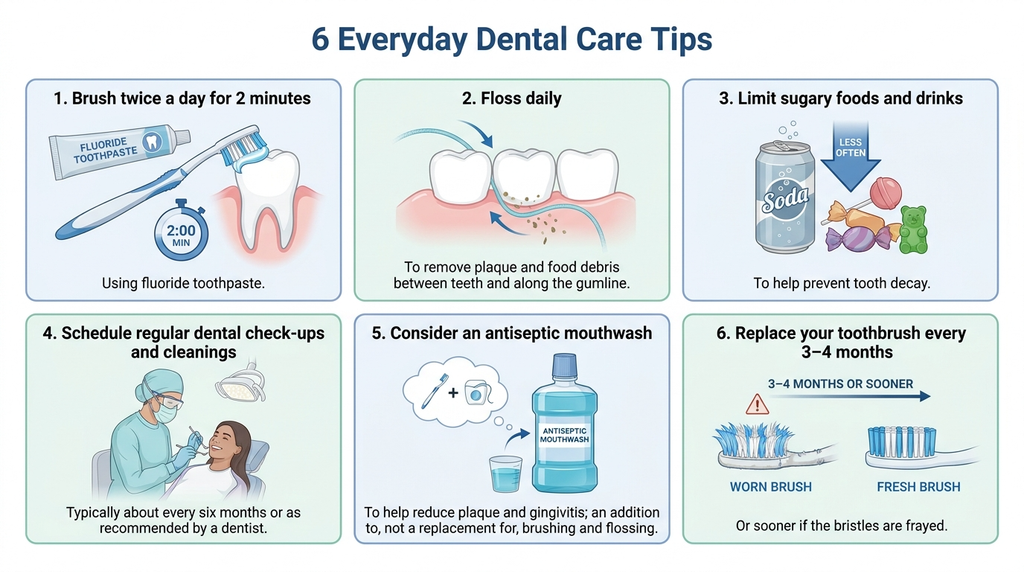
The golden rule of brushing is two minutes, twice a day, with fluoride toothpaste. Studies show that brushing for a full two minutes removes significantly more plaque than a quick 60-second scrub.
- Pro Tip: Divide your mouth into four quadrants and spend 30 seconds on each. Use a toothbrush with a built-in timer or play a two-minute song to keep track.
Choose the Right Tools
- Go Soft: Always use a soft-bristled toothbrush. Medium or hard bristles, combined with aggressive scrubbing, can actually cause gum recession and wear away your enamel over time.
- Manual vs. Electric: Both are highly effective if used correctly. However, powered toothbrushes are excellent for people with limited manual dexterity, braces, or those who simply want a deeper clean.
The “Spit, Don’t Rinse” Technique
This is the most commonly broken rule in dental care! After you brush, spit out the excess toothpaste, but do not rinse your mouth with water. Rinsing washes away the concentrated fluoride, stripping your teeth of the protective, enamel-strengthening benefits. Let that residual fluoride sit on your teeth and do its job.
🧵 2. Rethink “Flossing”: Clean Between Your Teeth Daily
Let’s address the elephant in the room: many people feel guilty because they don’t floss. The dental community is shifting the narrative from “you must floss” to “you must clean between your teeth.”
Find Your Preferred Tool
Plaque loves to hide in the tight spaces between your teeth where your brush can’t reach. If traditional string floss isn’t your favorite, you have plenty of scientifically backed alternatives:
- Interdental brushes: Tiny brushes that slide between teeth; highly effective for larger gaps.
- Water flossers (oral irrigators): Great for people with braces, bridges, or a strong dislike for string floss.
- Floss picks: Convenient and easy to use, especially for on-the-go cleaning.
The Golden Rule of Interdental Cleaning: The “best” tool is the one you will actually use consistently. Find what works for your hands and your mouth, and make it a daily habit.
🍎 3. Eat and Drink for Oral Health
Your diet plays a massive role in the health of your teeth and gums. It’s not just about what you eat, but how you eat it.
Mind the Sugar and Acid
When you consume sugary or starchy foods, the bacteria in your mouth feed on them and produce acid. This acid attacks your enamel for about 20 to 30 minutes after you eat.
- Limit snacking frequency: Every time you eat a snack, you trigger a new acid attack. Try to stick to distinct meal times to give your saliva a chance to neutralize the acid and remineralize your teeth.
- Choose tooth-friendly snacks: Crunchy vegetables (carrots, celery), nuts, and cheese are excellent choices. Cheese, in particular, helps raise the pH level in your mouth and provides calcium.
Hydrate with Fluoridated Water
Water is the ultimate mouth cleanser. It washes away food particles and stimulates saliva production. If your local water supply is fluoridated, drinking tap water is one of the easiest and most effective ways to prevent tooth decay.
🩺 4. The Dentist Chair: Why Professional Care is Non-Negotiable
Even the best at-home routine can’t catch everything. Here is why you need to see your dentist regularly (usually every 6 months, or as recommended based on your specific risk factors):
- Tartar Removal: Plaque that isn’t removed hardens into tartar (calculus). Once tartar forms, no amount of brushing or flossing will remove it; it requires professional scaling.
- Oral Cancer Screening: During your check-up, your dentist will examine your mouth, tongue, and throat for early signs of oral cancer. Early detection is life-saving.
- Personalized Advice: Your dentist can assess your specific risk for cavities or gum disease and tailor your home care routine, recommending prescription-strength fluoride or specific antimicrobial rinses if needed.
🚭 5. Lifestyle Factors: The Hidden Culprits
Your overall health and your oral health are deeply interconnected.
- Ditch Tobacco: Smoking or chewing tobacco is a major risk factor for severe gum disease, tooth loss, and oral cancer. If you use tobacco, quitting is the single best thing you can do for your smile.
- Limit Alcohol: Heavy alcohol use increases the risk of head and neck cancers.
- Manage Dry Mouth: Saliva is your mouth’s natural defense system. Many common medications (including antihistamines and blood pressure drugs) cause dry mouth. If your mouth feels dry, sip water, chew sugar-free gum (look for xylitol), and talk to your doctor or dentist about saliva substitutes.
- Control Chronic Conditions: There is a well-documented “two-way street” between diabetes and gum disease. High blood sugar increases the risk of severe gum infections, and severe gum disease can make blood sugar harder to control. Managing your systemic health directly protects your teeth.
💡 6. Special Situations: Quick Tips for Unique Challenges
- Pregnancy: Hormonal changes can make your gums more sensitive and prone to inflammation (“pregnancy gingivitis”). Maintain your routine and definitely schedule at least one dental check-up during your pregnancy.
- Acid Reflux or Morning Sickness: If you vomit, do not brush your teeth immediately. Stomach acid softens your enamel, and brushing right away can scrub the enamel away. Instead, rinse your mouth with a mixture of 1 teaspoon of baking soda in a glass of water to neutralize the acid, and wait at least 30 to 60 minutes before brushing.
- Contact Sports: Never step onto the field or court without a mouthguard. A custom-fitted mouthguard from your dentist offers the best protection against traumatic tooth injuries.
The Bottom Line: Consistency Over Perfection
Perfect oral health isn’t about having a flawless routine every single day; it’s about consistent, evidence-based habits over a lifetime. By brushing correctly for two minutes, cleaning between your teeth daily, making smart dietary choices, and keeping up with professional dental visits, you are setting yourself up for a lifetime of healthy, confident smiles.
Over to You: What is your biggest challenge when it comes to your daily dental routine? Do you prefer a water flosser or traditional string floss? Let us know in the comments below, and don’t forget to share this guide with a friend who needs a dental health refresh!