A big US pharmacy chain announced it is splitting up, Big Pharma raised its forecasts, China kept attracting billion-dollar deals and the FDA approved several new treatments. Here’s what mattered this week and why, with links to read more.
1. CVS is breaking up its healthcare empire
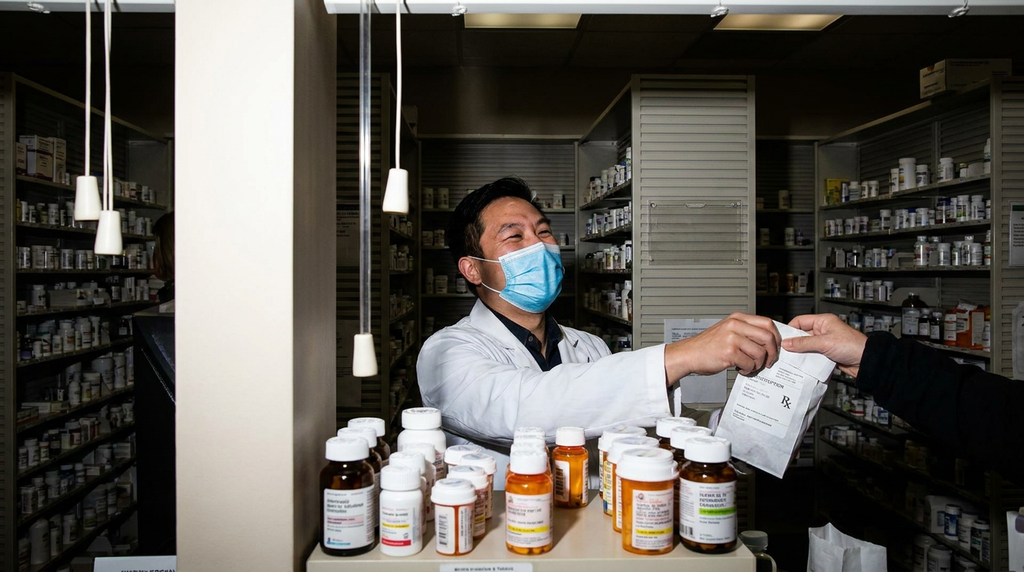
This was the biggest pharmacy story of the week. CVS Health plans to separate its roughly 9,000 retail pharmacies from its Aetna insurance and Caremark pharmacy benefit manager (PBM) businesses in early 2028. This undoes the nearly $70 billion merger that reshaped US healthcare a decade ago.
Independent pharmacists welcomed the news and say separating pharmacies from PBMs could boost competition and lower costs. The National Community Pharmacists Association (NCPA) still warns it is too early to celebrate.
Why it matters: this is the clearest sign yet that the vertically integrated “insurer + PBM + pharmacy” model is under pressure.
Read more: Fox Business — CVS breakup and what it means · NCPA — This week’s pharmacy reading · MM+M — Five things for pharma marketers, Nov 5
2. US midterms put drug pricing back on the agenda
Democrats won control of Congress in the midterm elections, and analysts expect new fights over drug prices and PBM reform. Pharmacy groups are also focused on the Department of Labor’s new rule on PBMs and on concerns that PBMs are punishing pharmacies that back reform.
Read more: The Pharma Letter — Leerink on election implications · NCPA — PBM reform reading list
3. Earnings: obesity drugs still drive the industry
Eli Lilly (reported in late October) posted $24.4 billion in quarterly revenue, well above forecasts, and raised its full-year outlook to $91–92 billion. Mounjaro alone brought in $10.7 billion, and Lilly now holds about 63% of the US obesity and diabetes drug market.
Novo Nordisk raised its 2026 outlook to flat sales, helped by its Wegovy pill outselling Lilly’s rival pill Foundayo. Its CFO is also stepping down.
Pfizer beat expectations with $16.6 billion in revenue and raised guidance to $62–64 billion. Sales of its newly launched and acquired products grew 32%.
Across 16 of the largest drugmakers, Q3 revenue reached about $211.8 billion, up roughly 10%. Lilly alone accounted for about a third of that growth.
Read more: CNBC — Eli Lilly Q3 · Endpoints — Novo forecasts flat 2026 sales · CNBC — Pfizer Q3 · BioPharma Watch — Big Pharma Q3 ranked
4. Deals: China is still the hotspot
Boehringer Ingelheim signed a deal with Sino Biopharmaceutical for six early-stage cancer programs, mostly antibody-drug conjugates (ADCs) and T-cell engagers. It is paying $358 million upfront and near-term, with up to $7 billion more in milestone payments.
AstraZeneca has reportedly made a $10 billion offer for Rhythm Pharmaceuticals, a company focused on rare metabolic diseases.
The biotech IPO market is picking up again, with Rezera looking to raise $181 million for a phase 3 heart-disease trial.
Read more: The Pharma Letter — Boehringer’s $7B ADC deal · RSM — 5 things in life sciences this week · Cafepharma — AstraZeneca / Rhythm and IPO news
5. FDA approvals and regulation
- Head and neck cancer: accelerated approval for J&J’s Rybrevant Faspro.
- Recurrent respiratory papillomatosis: accelerated approval for Inovio’s Voceryq, the first plasmid DNA-based immunotherapy for the disease.
- Psoriatic arthritis: approval for Sun Pharma’s Ilumya, a win for an Indian drugmaker.
- Wet AMD (an eye disease): approval for Xbrane’s Lucamzi, a biosimilar to Lucentis.
- Gene therapy: the FDA issued final guidance on potency standards for cell and gene therapies and accepted uniQure’s Huntington’s disease gene therapy for priority review.
Read more: FDA — Press announcements · The Pharma Letter — FDA news · Pharmacy Times — Ilumya approval · EyeWorld — Lucamzi biosimilar
6. Safety and science headlines
Zolgensma: new tumor cases have been reported among patients treated with Novartis’ gene therapy for spinal muscular atrophy.
Madrigal: a former executive has filed a whistleblower lawsuit accusing the company of hiding safety concerns about its liver disease (MASH) drug.
Personalized cancer vaccines: Merck and Moderna say they made and delivered individual mRNA vaccines for 99% of trial patients, as the shots move closer to market.
AI reality check: no AI-designed drug has yet won FDA approval, and pharma CEOs say biology, not computing power, is the real bottleneck.
Read more: Cafepharma — Zolgensma tumor reports · Endpoints — Madrigal and Zolgensma · BioSpace — Merck and Moderna mRNA vaccine · MM+M — AI and drug discovery
7. Pharmacy workforce watch
The American Society of Health-System Pharmacists (ASHP) warns that pharmacy school applications are falling and fewer pharmacists are entering pediatric practice, and is calling for creative ways to grow the pipeline. It’s the same workforce squeeze we’re seeing in Nigeria and around the world.
Read more: ASHP NewsCenter
My takeaway
Three themes ran through the week: obesity drugs keep driving the industry’s growth, China has become a major source of new drug candidates, and the business model of pharmacy — PBMs, pricing and the workforce — is being questioned more openly than ever.
Which of these stories matters most for your work? Let me know in the comments. 👇
#Pharmacy #Biopharma #Pharmaceuticals #HealthcareInnovation #DrugDevelopment #PBM #GLP1 #FDA #Biotech #PharmacyPractice
Oct 30 – Nov 6, 2026