
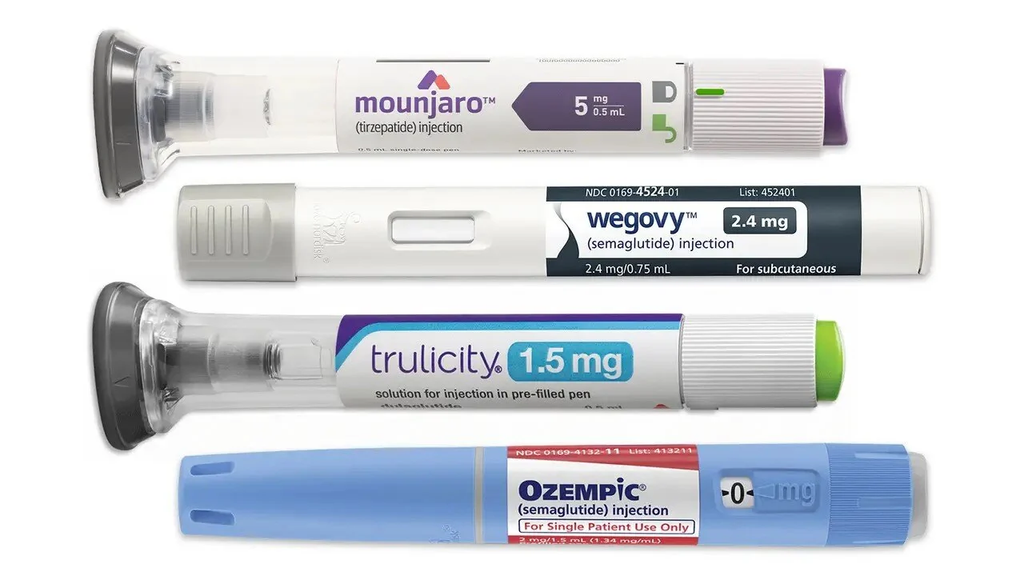
GLP-1 drugs such as Ozempic, Wegovy, Mounjaro and Zepbound picked up a new safety warning this week, and a new possible use. On November 9, 2026, the FDA ordered every drug in the class to carry a warning about a rare eye condition. The same day, researchers reported that a daily GLP-1 pill sharply reduced sleep apnea episodes.
Neither story changes the basic picture: these are effective medicines with real but mostly uncommon risks. Here is what happened, what it means, and where cost and coverage stand.
The FDA’s new vision-loss warning
All GLP-1 drugs must now warn about a rare optic nerve condition called NAION, which can cause sudden and sometimes permanent vision loss. The order covers about a dozen approved drugs, both injections and pills, according to AP reporting carried by MPR News and BioSpace.
NAION stands for non-arteritic anterior ischemic optic neuropathy. It happens when blood flow to the optic nerve drops, and it is sometimes called an “eye stroke.”
The risk is small in absolute terms. The FDA pooled 126 clinical trials and found 6.4 cases per 100,000 person-years among GLP-1 users, against 3.8 in comparison groups, ABC News reported. That analysis turned up 15 probable cases in total, 10 of them in people taking a GLP-1.
Whether the drugs cause NAION is still an open question:
- The conditions GLP-1 drugs treat, including type 2 diabetes, obesity, sleep apnea and high blood pressure, are themselves risk factors for NAION, NBC News noted.
- Novo Nordisk told ABC News that current research does not establish that the drugs cause it. Eli Lilly said the FDA’s notice cites no findings specific to its medicines.
- Earlier studies have produced mixed results, and the FDA says the mechanism is not understood.
The FDA’s advice to clinicians is to consider stopping the drug if signs of NAION appear, unless the benefits clearly outweigh the risk, The National reported. An ophthalmologist interviewed by The Washington Post said the warning should not by itself put people off the drugs.
A GLP-1 pill cut sleep apnea episodes
A daily GLP-1 pill reduced breathing interruptions during sleep by about 18 per hour after one year, compared with about 5 on placebo. The results come from two year-long trials of Eli Lilly’s orforglipron, presented at the American Heart Association’s Scientific Sessions 2026.
Participants were adults with moderate-to-severe sleep apnea and a BMI of 27 or higher. The findings are preliminary: they were presented at a conference and have not yet been through full peer review.
The result extends a pattern. GLP-1 drugs began as diabetes treatments, and some now also carry approvals for obesity, cardiovascular disease, kidney disease and obstructive sleep apnea.
What the drugs cost under Medicare
Eligible Medicare Part D enrollees in the US can now get certain GLP-1 drugs for weight loss at a flat $50 a month. The program, called the Medicare GLP-1 Bridge, started on July 1, 2026, and is an 18-month demonstration, according to epocrates.
Before this, Medicare drug plans generally could not cover these medicines for weight loss alone. The Bridge runs outside the standard Part D benefit, so it is a temporary fix, not permanent coverage.
The longer-term plan is less settled. A broader model called BALANCE launched for Medicaid in May 2026, but the Medicare version was delayed indefinitely in April, HLTH reported. What happens when the Bridge ends at the close of 2027 is an open question.
What is coming next
The next phase of GLP-1 treatment is moving beyond weekly injections.
- Pills. Orforglipron is now sold in the US under the brand name Foundayo. Novo Nordisk is aiming for a 10-fold increase in manufacturing capacity for its Wegovy pill by 2030, according to BioSpace.
- Stronger combinations. Lilly’s retatrutide, which targets three hormones instead of one, has posted strong Phase 3 results, according to Manufacturing Chemist.
- New formats. The same round-up describes nasal and AI-designed candidates in development at smaller companies.
What this means if you take a GLP-1
The new warning is a reason to stay alert, not a reason to stop your medication on your own.
- Tell your prescriber promptly about any sudden change in vision, especially in one eye.
- Do not stop a prescribed drug without talking to your clinician first. The reported risk is a few extra cases per 100,000 people per year.
- If you are on Medicare and cost has kept you from treatment, ask your plan or pharmacist whether you qualify for the $50 Bridge program.
This post is general information, not medical advice.
Sources
- FDA adds rare vision-loss warning to popular GLP-1 drugs (MPR News / AP): https://www.mprnews.org/story/2026/11/09/fda-adds-rare-visionloss-warning-to-popular-glp1-drugs
- FDA orders new warning on GLP-1 drugs over rare eye condition (ABC News): https://abcnews.com/GMA/Wellness/fda-orders-new-warning-ozempic-wegovy-glp-1/story?id=137981627
- FDA orders new warning on GLP-1s over rare eye condition linked to sudden blindness (NBC News): https://www.nbcnews.com/health/health-care/fda-orders-new-warning-glp-1s-rare-eye-condition-linked-sudden-blindne-rcna608309
- The FDA has a new warning about GLP-1s and vision loss. Should you worry? (The Washington Post): https://www.washingtonpost.com/health/2026/11/10/fda-has-new-warning-about-glp-1s-vision-loss-should-you-worry/
- FDA orders new warning on GLP-1 drugs over potential risk of blindness (The National): https://www.thenationalnews.com/future/science/2026/11/10/do-glps1s-cause-blindness/
- FDA orders class-wide GLP-1 label update (BioSpace): https://www.biospace.com/fda/fda-orders-class-wide-glp-1-label-update-to-include-potential-risk-for-rare-eye-disease
- FDA warns GLP-1s could increase risk of vision loss (WBUR Here & Now): https://www.wbur.org/hereandnow/2026/11/10/glp1-drugs-eye-condition
- Daily, oral GLP-1 medication reduced episodes of sleep apnea (American Heart Association): https://newsroom.heart.org/news/daily-oral-glp-1-medication-reduced-episodes-of-sleep-apnea-in-adults-with-excess-weight
- Medicare to cap cost of GLP-1s for weight loss at $50 (epocrates): https://www.epocrates.com/online/article/medicare-to-cap-cost-of-glp-1s-for-weight-loss-at-50
- Medicare GLP-1 Bridge: Why Lower Prices Still Fall Short (HLTH): https://hlth.com/insights/articles/medicare-glp-1-bridge-why-lower-prices-still-fall-short
- GLP-1 news round-up: what’s happened in weight loss (Manufacturing Chemist): https://manufacturingchemist.com/glp-1-round-up-what-s-happened-weight-loss