
Introduction
A common claim circulating in conversations and on social media is that regular breast sucking or nipple stimulation by a sexual partner may reduce a woman’s risk of developing breast cancer. The proposed explanation is usually that breast stimulation promotes circulation, removes potentially harmful substances from the breast, or produces hormonal changes that protect breast tissue.
But does science actually support this idea?
The short answer is no—not based on current evidence.
There is currently no established scientific evidence demonstrating that sexual breast sucking, nipple stimulation, or breast massage reduces a woman’s long-term risk of breast cancer.
However, the claim may have become confused with a scientifically supported observation: breastfeeding is associated with a modest reduction in breast cancer risk. Breastfeeding involves substantial hormonal, cellular, and physiological changes in the mammary gland that are fundamentally different from sexual stimulation of the breast.
Understanding this distinction is essential.
1. Breast Cancer Is a Complex Biological Disease
Breast cancer develops when breast cells acquire genetic and molecular abnormalities that allow them to grow and divide uncontrollably.
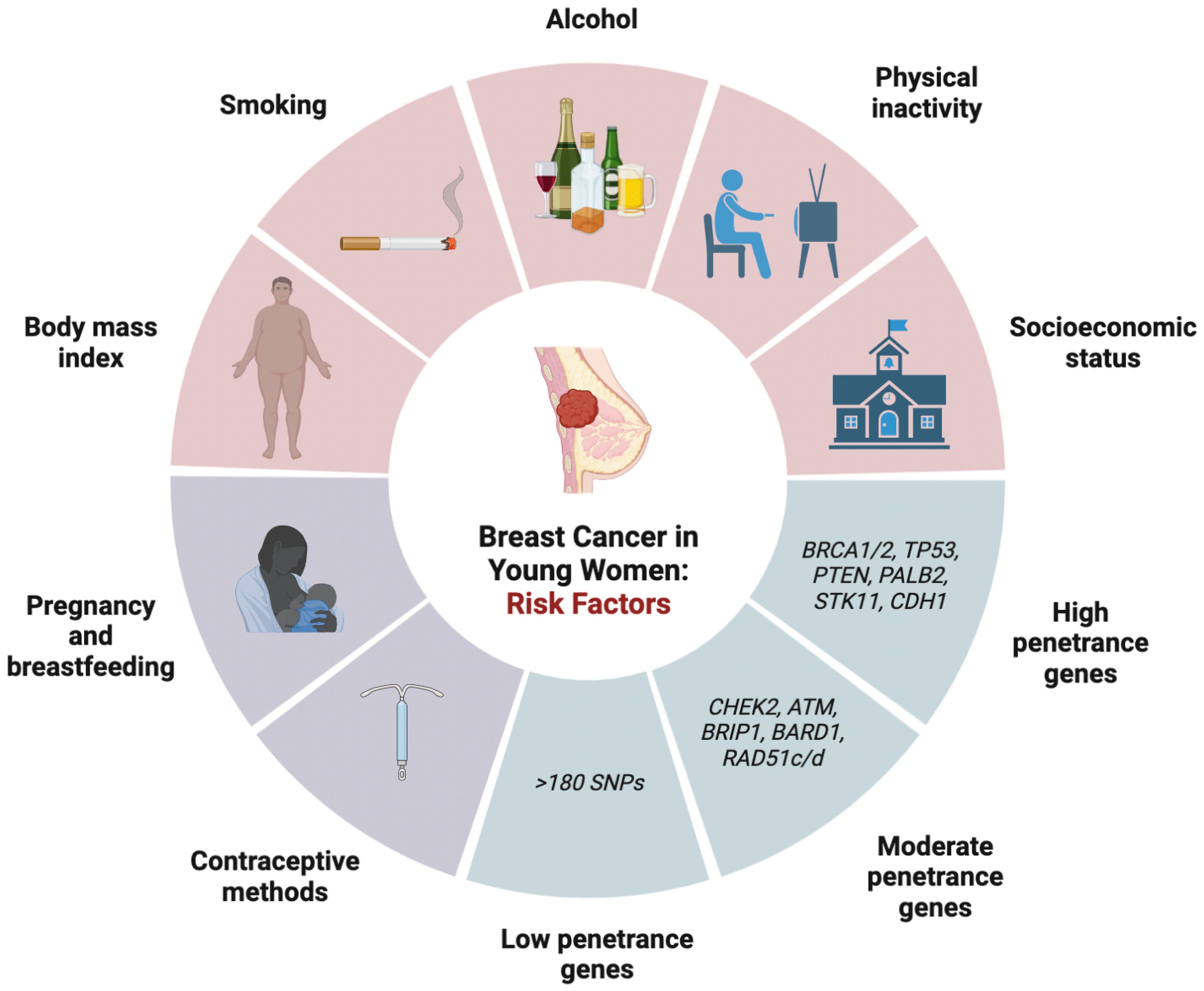
Cancer development is influenced by multiple factors, including:
- Age
- Genetics
- Family history
- Hormonal exposure
- Reproductive history
- Body composition
- Alcohol consumption
- Physical activity
- Previous radiation exposure
- Certain inherited genetic variants
- Previous breast abnormalities
Because breast cancer has multiple causes and pathways, a biological activity would need to demonstrate a meaningful effect on one or more of these mechanisms before it could reasonably be considered protective.
Simply stimulating breast tissue does not, by itself, establish cancer prevention.
2. Why Might People Think Breast Sucking Could Prevent Cancer?
There are several possible reasons for the belief.
One is the intuitive idea that stimulation increases blood flow and therefore somehow “cleans” or protects breast tissue.
Another is the observation that breast milk production and breastfeeding are associated with reduced breast cancer risk.
A third possibility is the belief that nipple stimulation releases hormones such as oxytocin and prolactin, and therefore these hormones might protect the breast.
These ideas sound biologically plausible at first.
However, biological plausibility is not the same as demonstrated cancer prevention.
A proposed mechanism must ultimately be supported by epidemiological studies, clinical studies, or other reliable evidence demonstrating that the activity actually lowers cancer incidence.
At present, such evidence is lacking for sexual breast stimulation.
3. Breastfeeding Is Different From Sexual Breast Stimulation
This is probably the most important scientific distinction.
Research has consistently found an association between breastfeeding and a modest reduction in breast cancer risk.
But breastfeeding is not simply “someone sucking the breast.”
During pregnancy and lactation, the mammary glands undergo profound biological changes.
These include:
- Development of milk-producing structures
- Differentiation of mammary epithelial cells
- Major hormonal changes
- Changes in estrogen and progesterone exposure
- Prolactin-mediated lactation
- Oxytocin-mediated milk ejection
- Extensive remodeling of mammary tissue
- Subsequent involution of the breast after lactation ends
These processes may influence breast cancer risk.
Therefore, it would be scientifically incorrect to take the evidence concerning breastfeeding and conclude that sexual breast sucking produces the same protective effect.
4. One Proposed Explanation: Mammary Cell Differentiation
One hypothesis concerning breastfeeding and breast cancer involves mammary cell differentiation.
During pregnancy and lactation, mammary epithelial cells undergo substantial differentiation so that they can produce and secrete milk.
Some researchers have proposed that highly differentiated cells may be less susceptible to certain malignant transformations than less differentiated cells.
This is one possible explanation for the observed relationship between reproductive history, breastfeeding, and breast cancer risk.
However, sexual stimulation without pregnancy and lactation does not produce the same extensive differentiation of mammary tissue.
Therefore, this mechanism cannot simply be applied to sexual breast stimulation.
5. Another Possible Mechanism: Reduced Lifetime Hormonal Exposure
Hormonal exposure is important in breast cancer biology.
Estrogen, progesterone, and other hormonal pathways can influence the growth and proliferation of breast cells.
Pregnancy and breastfeeding alter the woman’s reproductive hormonal environment.
Women who experience more months of breastfeeding also generally experience periods during which they are not menstruating.
This can reduce the number of lifetime menstrual cycles and therefore potentially reduce cumulative exposure to ovarian hormones.
This is one proposed explanation for the association between breastfeeding and reduced breast cancer risk.
Again, this mechanism does not apply in the same way to sexual breast stimulation.
A partner sucking the breast does not reproduce the endocrine state of pregnancy and prolonged lactation.
6. What About Oxytocin?
Nipple stimulation can cause the release of oxytocin.
Oxytocin is involved in several physiological processes, including:
- Milk ejection during breastfeeding
- Uterine contractions
- Social bonding
- Certain reproductive functions
Because oxytocin has biological effects on mammary tissue and other organs, it is reasonable to ask whether oxytocin could influence cancer biology.
However, this is where scientific caution is necessary.
The fact that a behavior causes the release of a hormone does not mean that the behavior prevents cancer.
Cancer biology is extremely complex, and a molecule can have different effects depending on the tissue, receptor expression, concentration, timing, and cellular environment.
There is currently insufficient clinical evidence to conclude that oxytocin released by sexual breast stimulation prevents breast cancer.
7. Does Breast Sucking “Clean Out” the Breast?
Another common explanation is that breast sucking somehow removes harmful substances, toxins, abnormal cells, or stagnant fluid from the breast.
There is no established scientific basis for this claim.
The breast is not a container in which cancer-causing substances accumulate and can be physically removed through sucking.
Breast tissue has its own blood supply, lymphatic system, immune system, and cellular waste-removal mechanisms.
The lymphatic system transports fluid and immune cells through lymphatic vessels and lymph nodes. It does not require sexual stimulation of the breast to function normally.
Therefore, the idea that sucking the breast “cleans the breast” and thereby prevents cancer is not supported by established breast biology.
8. Does Increased Blood Flow Prevent Breast Cancer?
Sexual stimulation can temporarily increase blood flow to the breast and nipple.
But increased blood flow is not equivalent to cancer prevention.
Cancer cells develop because of complex molecular and genetic abnormalities—not simply because an area of tissue has inadequate circulation.
In fact, tumors develop their own blood supply through processes such as angiogenesis.
Therefore, the idea that mechanically increasing circulation through breast stimulation prevents breast cancer does not have a sound scientific basis.
9. What Does the Epidemiological Evidence Show?
The strongest evidence for reduced breast cancer risk concerns breastfeeding, not sexual breast stimulation.
Large epidemiological studies have observed that women who breastfeed have a modestly lower risk of breast cancer, with risk generally decreasing as the cumulative duration of breastfeeding increases.
A major collaborative analysis published in The Lancet found that the relative risk of breast cancer decreased by approximately 4.3% for every 12 months of breastfeeding, in addition to a reduction associated with each birth.
This is important evidence—but it must be interpreted correctly.
The study examined breastfeeding, not sexual breast sucking.
Therefore, the finding cannot legitimately be used as evidence that sexual breast stimulation prevents breast cancer.
10. What Would Scientists Need to Prove the Claim?
If someone wanted to establish that sexual breast stimulation protects against breast cancer, scientists would need substantially stronger evidence.
For example, researchers could conduct large prospective studies comparing women according to patterns of sexual breast stimulation while controlling for major breast cancer risk factors.
Ideally, researchers would examine:
- Frequency of breast stimulation
- Duration over many years
- Age at exposure
- Reproductive history
- Breastfeeding history
- Number of pregnancies
- Family history
- Genetic risk
- Hormonal contraceptive use
- Menopausal status
- Alcohol consumption
- Body mass index
- Physical activity
- Screening behavior
Researchers would then determine whether breast cancer incidence differed significantly between groups.
Without this type of evidence, claiming that breast sucking prevents breast cancer would be scientifically premature.
11. Correlation Does Not Equal Causation
This principle is particularly important.
Suppose researchers discovered that women who experience more breast stimulation have lower rates of breast cancer.
That alone would not prove that breast stimulation caused the reduction.
Those women might differ in other important ways.
For example, they could have different:
- Reproductive patterns
- Pregnancy histories
- Breastfeeding histories
- Ages
- Hormonal exposures
- Health behaviors
- Healthcare access
These factors could explain the apparent association.
Scientists therefore distinguish between correlation and causation.
To establish causality, researchers need strong evidence that the exposure itself is responsible for the observed effect.
12. Could Breast Massage Be Different?
Breast massage is another practice sometimes discussed in relation to breast health.
Massage may temporarily affect:
- Local blood flow
- Tissue sensation
- Muscle tension
- Comfort
- Awareness of breast changes
But there is no established evidence that routine breast massage prevents breast cancer.
Its potential value may instead be related to breast awareness—because touching one’s breasts can make it easier to notice a new lump or change.
However, massage should not be presented as a cancer-prevention treatment.
13. The Important Role of Breast Awareness
Although touching or examining the breast does not prevent cancer, becoming familiar with the normal appearance and feel of your breasts can be useful.
A person may notice:
- A new lump
- A change in breast size or shape
- Skin dimpling
- Nipple inversion
- Unusual nipple discharge
- Persistent swelling
- Changes in the armpit
These findings do not necessarily mean cancer.
However, a new or persistent abnormality should be evaluated by a healthcare professional.
Thus, touching the breast can help with awareness, but awareness is different from prevention.
14. What Actually Has Evidence for Reducing Breast Cancer Risk?
Although not every breast cancer can be prevented, several factors are associated with lower risk.
These include:
Physical activity
Regular physical activity is associated with a lower risk of several cancers, including breast cancer.
Maintaining a healthy body weight
Particularly after menopause, excess body fat is associated with increased breast cancer risk.
Limiting alcohol
Alcohol consumption is associated with increased breast cancer risk, and reducing alcohol intake can reduce exposure to this risk factor.
Breastfeeding
Breastfeeding is associated with a modest reduction in breast cancer risk, particularly with longer cumulative duration.
Avoiding unnecessary radiation exposure
Medical radiation should be used when clinically appropriate, particularly during younger ages when breast tissue may be more sensitive.
Appropriate screening
Screening does not necessarily prevent a cancer from developing, but it can help detect breast cancer at an earlier stage, when treatment may be more effective.
15. So, Is the Claim Completely Impossible?
Science should be careful with absolute statements.
The appropriate conclusion is not:
“Breast sucking definitely has zero biological effect on breast cancer.”
Rather, the scientifically defensible statement is:
There is currently insufficient evidence to conclude that sexual breast sucking or nipple stimulation reduces breast cancer risk.
There may be physiological effects of nipple stimulation, including temporary hormonal and vascular changes.
But those effects have not been demonstrated to translate into a clinically meaningful reduction in breast cancer incidence.
That distinction is crucial.
Conclusion
The idea that sexual breast sucking prevents breast cancer is not supported by current scientific evidence.
The confusion may arise because breastfeeding is associated with a modest reduction in breast cancer risk. However, breastfeeding involves pregnancy-related hormonal changes, mammary-gland differentiation, milk production, prolonged lactation, and other physiological processes that are fundamentally different from sexual breast stimulation.
Nipple stimulation can produce temporary physiological responses, including oxytocin release and increased local blood flow. Nevertheless, there is no established evidence showing that these effects prevent the genetic and cellular processes responsible for breast cancer.
Therefore, breast sucking should not be promoted as a breast cancer prevention strategy.
The evidence-based approach is to understand individual risk factors, maintain healthy lifestyle behaviors, breastfeed when desired and possible, follow recommended screening guidelines, and seek medical evaluation for new or persistent breast changes.
The scientific bottom line:
Breastfeeding → evidence of a modest reduction in breast cancer risk.
Sexual breast sucking → no established evidence of breast cancer prevention.
Breast massage/stimulation → may affect sensation and blood flow, but has not been demonstrated to prevent breast cancer.
Breast awareness and recommended screening → important for detecting abnormalities early.
In health communication, it is therefore important not to turn a biologically plausible idea into a medical claim without epidemiological and clinical evidence.
This article is intended for health education and does not replace professional medical advice.