
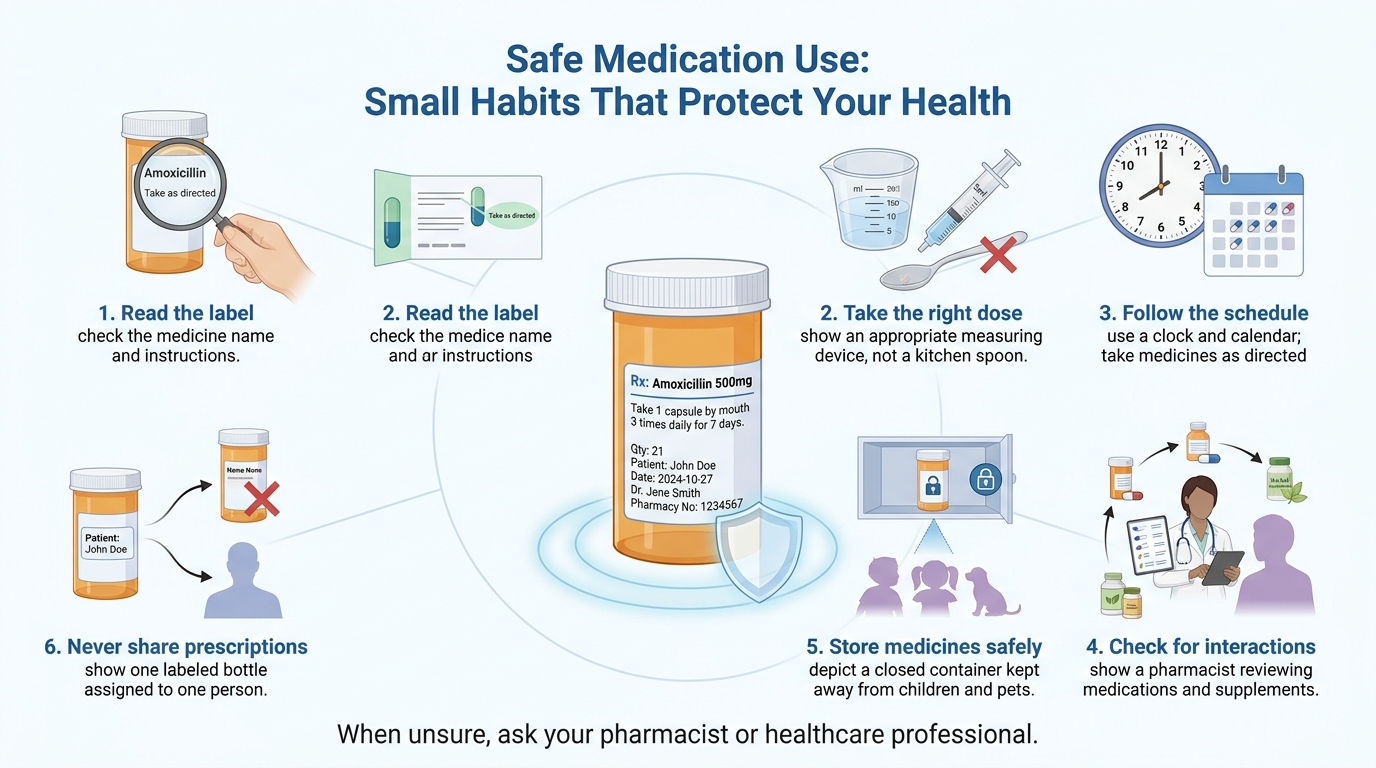
Medicines can relieve pain, control chronic conditions, and improve quality of life. However, getting the best results involves more than taking the right pill. It also means understanding the dose, recognizing possible interactions, storing medicines properly, and knowing when to ask for help. Prescription medicines, over-the-counter products, vitamins, and herbal supplements all deserve careful attention.fda+1
Medication safety is a partnership between you and your healthcare team. Your doctor or other prescriber selects treatment, your pharmacist helps you understand and use it safely, and you provide essential information about what you take and how you feel. A few consistent habits can make that partnership more effective.fda
1. Understand Every Medicine You Take
Before starting a medicine, make sure you know its name, its purpose, and how to use it. Understanding your treatment can help you follow instructions and recognize when you need clarification. Do not hesitate to ask for a plain-language explanation or written directions.fda
Useful questions include:
- What condition or symptom does this medicine treat?
- What dose should I take, and how often?
- Should I take it with food or on an empty stomach?
- How long should I continue taking it?
- What side effects should I watch for?
- Could it interact with my other medicines or supplements?
- How will we know whether it is working?fda+1
Before leaving the pharmacy, explain the instructions back in your own words—for example, “I will take one tablet each morning with breakfast.” This gives the pharmacist an opportunity to clarify anything you misunderstood.
2. Keep an Updated Medication List
A medication list gives your healthcare team a clearer picture of your treatment. Include everything you take, not just prescriptions. Over-the-counter pain relievers, allergy tablets, sleep aids, vitamins, and herbal products may affect how other medicines work.fda+1
For each product, record:
- The medicine or product name.
- Its strength and the amount you take.
- When and how often you take it.
- Why you take it.
- Any allergies or previous medication reactions.fda
Keep a copy on your phone or in your wallet, and update it whenever your treatment changes. Bring it to appointments and show it to your pharmacist when asking about a new product. A list is most useful when it reflects what you actually take, including occasional medicines—not only what was originally prescribed.fda+1
3. Follow the Dose and Schedule Carefully
More medicine does not necessarily mean better or faster relief. Taking a larger dose, taking doses too close together, or using an over-the-counter product longer than recommended can increase the risk of harm. Follow the prescription instructions or package label rather than adjusting treatment yourself.fda+1
Read the label each time, especially when starting a new package. Check the medicine name, strength, directions, and expiration date. Avoid taking medicines in the dark, when it is harder to confirm what you are using.fda
If instructions seem unclear or conflict with what you remember being told, ask the pharmacist or prescriber to clarify them before guessing.
What if you miss a dose?
There is no single missed-dose rule that applies to every medicine. Ask your pharmacist for instructions specific to your treatment and keep those directions with your medication schedule. Do not assume that taking extra medicine is the right solution; use only the recommended dose unless your healthcare professional directs otherwise.fda+1
Similarly, do not stop a prescribed medicine simply because you feel better, think it is not working, or experience a bothersome effect. Contact your healthcare professional to discuss a safe plan.fda
4. Check Active Ingredients, Not Just Brand Names
Two products with different names may contain the same active ingredient—the substance responsible for the medicine’s effect. Taking both can accidentally give you more of that ingredient than intended. Combination cold and flu products deserve particular attention because they may contain several medicines in one package.fda
For example, a person might take acetaminophen for a headache and then take a cold remedy that also contains acetaminophen. The packages look different, but the ingredient overlaps. Checking the active-ingredient section before combining products helps prevent this type of mistake.fda
When comparing products, look beyond the symptom advertised on the front of the box. A pharmacist can help determine whether their ingredients overlap or whether a single-ingredient product would better match your needs.fda+1
5. Ask About Interactions With Medicines, Food, and Alcohol
An interaction occurs when another substance or a health condition changes a medicine’s effects or risks. Interactions can involve prescription drugs, over-the-counter medicines, foods, drinks, and supplements. They may make treatment less effective or increase unwanted effects.fda+1
Before adding something new, tell your pharmacist or prescriber about:
- All prescription and nonprescription medicines you use.
- Vitamins, herbal remedies, and nutritional supplements.
- Alcohol use.
- Conditions such as kidney disease, high blood pressure, or diabetes.fda+1
Alcohol, for example, should be avoided with certain antihistamines, sleep medicines, and cough products containing dextromethorphan. Product-specific advice matters: the safest approach is to check the label and ask about your exact combination rather than assuming all products in a category have identical instructions.fda
6. Create a Medication Routine You Can Maintain
A useful medication plan needs to fit into everyday life while preserving the timing and food instructions your treatment requires. The goal is to make it easier to take the right medicine at the right time—not to change the prescribed schedule for convenience. Pharmacists can help you understand instructions and address obstacles to following treatment.fda
Consider a simple organizational system:
- Set phone reminders for scheduled doses.
- Keep a written checklist if you have trouble remembering whether you took a dose.
- Maintain a list of refill dates.
- Write down questions as they arise so you can discuss them with your pharmacist.
If you want to use a pill organizer, ask your pharmacist whether your medicines are suitable for it and how to preserve any special storage requirements. Some products have specific storage instructions, so one system may not work for every medicine.fda+1
Tell your healthcare team if cost, side effects, difficulty reading labels, or a complicated schedule makes treatment hard to follow. Raising the problem gives them an opportunity to help rather than leaving you to manage it alone.fda
7. Take Extra Care With Children’s Medicines
Children’s medicines require careful attention to the product’s age limits, dose instructions, and measuring device. Do not assume that an adult product can be made appropriate simply by giving a smaller amount. Follow the pediatric label and ask a pharmacist or clinician when you are uncertain.fda
For liquid medicines, use the dosing device supplied with the product, such as an oral syringe or dosing cup, rather than a household spoon. Accurate measurement is especially important because dosing errors with pediatric liquid acetaminophen have caused serious harm.fda+1
When more than one adult cares for a child, a shared written record can help everyone keep track of which medicine was given and when. Before giving another product, check for overlapping ingredients—particularly in pain, fever, cough, and cold medicines.fda
After each dose, close the container securely and return it to a safe location out of children’s sight and reach. Safe storage matters regardless of the type of packaging.fda
8. Review Medicines Regularly as You Get Older
Older adults may take several medicines and need particular attention to interactions, side effects, and treatment instructions. A medication review offers a chance to discuss whether each medicine is still needed, whether it is helping, and whether the current plan remains appropriate.fda
During a review, bring your current medication list and raise any new or bothersome symptoms. Ask whether any products overlap and whether you need particular monitoring. Do not discontinue treatment on your own; use the review to agree on changes with your healthcare professional.fda+1
This is also a useful opportunity to discuss practical concerns, such as difficulty opening containers, reading labels, or keeping track of a complicated schedule.
9. Pay Attention to Side Effects and Follow-Up Care
Medicines can cause unwanted effects even when taken correctly. Read the information provided with your medicine and ask which effects are common, which need prompt attention, and what you should do if they occur.fda+1
If you notice a new symptom, record:
- What you experienced.
- When it started.
- Whether you recently started or changed a medicine.
- When the symptom occurred in relation to a dose.
Share this information with your healthcare professional rather than assuming the medicine is—or is not—the cause. If side effects are making treatment difficult, seek advice before skipping doses or stopping.fda
Also ask whether your medicine requires follow-up appointments or tests. Safe use includes understanding how your care team will check both its benefits and its risks.fda+1
10. Store Medicines Where They Stay Safe and Effective
Storage instructions are part of a medicine’s directions. Many medicines should be kept in a cool, dry place, away from extreme temperatures, while some require different conditions. Read the label and accompanying information rather than assuming every product belongs in the same location.fda+1
For example, acetaminophen should be stored away from excess heat and moisture—not in the bathroom. Other medicines may have their own specific requirements.fda
Keep medicines out of children’s sight and reach, and use secure or locked storage where appropriate. Remember that medicines left in purses, bags, or on bedside tables can be accessible even when the main household supply is stored safely. FDA guidance recommends keeping medicines locked in a safe place away from children and other adults.fda+1
11. Dispose of Unused and Expired Medicines Properly
Keeping medicines that are no longer needed creates opportunities for accidental use or misuse. Check expiration dates and remove unused or expired products using an appropriate disposal method. For most medicines, the FDA recommends a drug take-back location or a prepaid medicine mail-back envelope as the preferred option.fda
If those options are unavailable:
- Check whether the medicine is on the FDA’s flush list. Only medicines on that list should be flushed unless you have specific disposal instructions.
- For most medicines not on the flush list, follow FDA household-trash instructions: mix the medicine with an undesirable material, such as used coffee grounds or cat litter, without crushing tablets or capsules; place the mixture in a sealed container or bag; and put it in the trash.
- Remove or obscure personal information on empty prescription packaging before discarding it.fda+2
If you are uncertain, ask a pharmacist. Disposal instructions can differ by product.fda
12. Make Your Pharmacist Part of Your Safety Team
Your pharmacist is an important resource, not just the person who supplies your medicine. Pharmacists can explain directions, check potential interactions, discuss side effects, and help you understand safe disposal. They can also advise you on next steps if your usual medicine is unavailable.fda
Useful questions at the pharmacy include:
- “Does this new product interact with anything on my medication list?”
- “Does it contain an ingredient I already take?”
- “What should I do if I miss a dose?”
- “Are there foods, drinks, or activities I should avoid?”
- “How should I store it?”
- “What symptoms mean I should seek medical advice?”fda+1
You do not need to wait until something goes wrong to ask these questions. A brief conversation before starting treatment can clarify how to use it safely.fda
A Medication Safety Checklist
Use these questions to prepare for your next appointment or pharmacy visit:
- Do I know what each medicine is for?
- Is my medication list current?
- Am I following the correct dose and schedule?
- Have I checked for duplicate ingredients?
- Have I discussed possible interactions?
- Do I know which side effects require attention?
- Are my medicines stored securely and under the right conditions?
- Have I removed medicines that are expired or no longer needed?fda+2
The Bottom Line
Safe medication use is not about memorizing every possible risk. It is about building a dependable routine: know what you take, follow directions, keep your healthcare team informed, and ask before making changes. These habits support the purpose of treatment—helping you feel better and manage your health while reducing avoidable harm.fda+1
This article provides general educational information and does not replace individualized advice from a qualified healthcare professional.