
Pharmacy school is a marathon run at a sprint’s pace. In four years (sometimes three), you go from memorizing the brachial plexus to recommending anticoagulation doses on a hospital team. The volume is relentless, and the stakes feel high because they are.
The good news: thousands of PharmDs graduate every year, and most of them aren’t geniuses. They figured out a system. This post is that system: how to study, how to manage your time, how to get the most from rotations, how to protect your sanity, and how to set yourself up for life after graduation.
1. Study smarter, not just longer
Rereading slides feels productive, but it’s the least effective way to learn. The volume in pharmacy school punishes passive studying fast.
- Use active recall. Close the notes and quiz yourself. Flashcards (Anki is a favorite) work especially well for brand/generic names, mechanisms, and side effects.
- Space it out. Reviewing a drug class for 20 minutes over five days beats five hours the night before. Spaced repetition is how the Top 300 drugs actually stick.
- Learn the class, then the exceptions. Know what all ACE inhibitors share (cough, hyperkalemia, angioedema), then memorize what makes one different. You’ll learn hundreds of drugs with far less effort.
- Connect it to patients. Ask “why would I pick this drug for this person?” Pharmacotherapy exams test judgment, not just facts.
- Teach it. If you can explain the RAAS pathway to a classmate without notes, you know it. If you can’t, you found your gap.
- Find your people. A small study group of two to four serious classmates keeps you accountable. A big group usually turns into a social hour.
2. Own your calendar
In pharmacy school, exams, labs, quizzes, and projects pile up in the same week constantly. The students who survive treat their schedule like a med list: reviewed often, nothing missed.
- Map the whole semester on day one. Put every exam, practical, and deadline from every syllabus into one calendar. Find the brutal weeks now, not the Sunday before.
- Block your study time. Schedule it like a class. “Study pharmacology” is vague; “Tuesday 6–8 pm: beta blockers, cards + practice questions” gets done.
- Stay one lecture ahead, or at least current. Falling behind compounds quickly when new material builds on old.
- Practice questions beat notes. Do as many as you can before each exam. They show you how professors think and where you’re weak.
- Review every exam you get back. Figure out whether you missed it from not knowing, misreading, or overthinking. Each needs a different fix.
- Learn to triage. Not every assignment deserves 100%. Put your energy where the points and the learning are.
3. Make rotations count
Your IPPEs (early experiential rotations) and APPEs (the final-year rotations) are where pharmacy stops being a subject and becomes a job. They’re also an extended job interview.
- Show up early and prepared. Read up on the site’s common disease states before day one. Preceptors notice who did the homework.
- Ask good questions, then look things up first. “I checked the guideline and saw X, but why would we choose Y here?” lands much better than “What does this drug do?”
- Volunteer for the extra patient case or presentation. Effort is remembered when it’s time for recommendation letters.
- Keep a running brain sheet. Write down every drug, interaction, and pearl you see. It becomes your best NAPLEX study guide.
- Take feedback well. Say thank you, fix it, and don’t make the same mistake twice. That’s what preceptors actually evaluate.
- Explore widely. Try settings you don’t think you’ll like: ambulatory care, industry, oncology, community. Many pharmacists end up in a field they never expected.
4. Protect your mind and body
Burnout is common in pharmacy school, and it doesn’t make you weak. It means the load is real. Your wellbeing isn’t a reward for finishing your work; it’s what lets you keep doing it.
- Guard your sleep. All-nighters wreck memory consolidation. Seven hours before an exam usually beats three extra hours of cramming.
- Move every day. A 20-minute walk counts. Exercise is one of the most reliable tools for stress and focus.
- Keep one thing that isn’t pharmacy. A sport, a hobby, a weekly dinner with friends outside your class. You need an identity beyond your GPA.
- Stop comparing. Someone will always seem to study less and score more. Their path isn’t yours.
- Use your school’s resources. Most programs offer free counseling, tutoring, and academic advising. Using them early is smart, not a last resort.
- Speak up if you’re struggling. Tell a friend, a faculty mentor, or a counselor. If you’re ever in crisis, call or text 988 (the Suicide & Crisis Lifeline in the US).
5. Think past graduation, starting now
The students with the best options in P4 year started building them in P1. A little planning each year saves a lot of panic later.
- Get a pharmacy job early. Working as an intern in a community or hospital pharmacy builds skills, connections, and your resume. Plus some income.
- Join one or two organizations and actually show up. APhA-ASP, SSHP, or a specialty group gives you leadership roles, conferences, and mentors. Depth beats a long list of memberships.
- Find a mentor. A faculty member or pharmacist a few years ahead can tell you what no syllabus will.
- Decide early if residency is on the table. If PGY1 interests you, you’ll want strong grades, leadership, research or a project, and good letters. Plan to attend ASHP Midyear in your final year.
- Watch your loans. Track what you borrow, live like a student, and learn your repayment options before graduation, not after.
- Start board prep before your last rotation ends. NAPLEX and your state’s law exam (MPJE for most states) are easier when the material is still fresh.
The bottom line
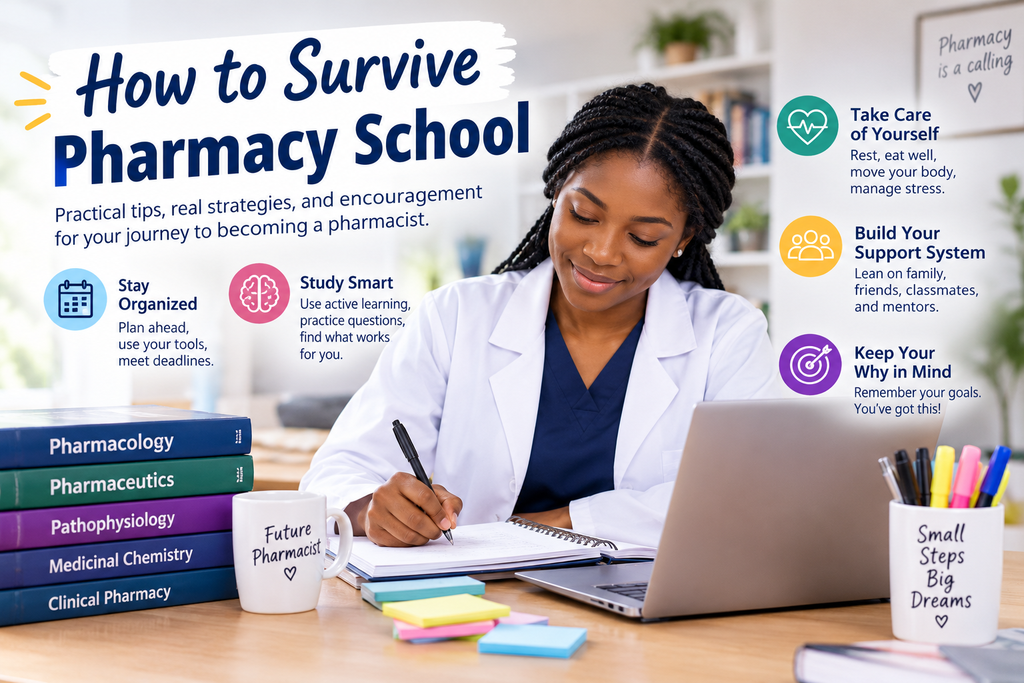
You don’t survive pharmacy school by being perfect. You survive it by studying actively, staying organized, treating rotations seriously, taking care of yourself, and keeping one eye on the future.
There will be bad exam days and weeks when everything is due at once. That’s normal. Lean on your classmates, ask for help early, and remember why you started: one day soon, you’ll be the person patients trust to get their medications right. That’s worth the long nights.