GLP-1 medications are clearly the standout trending topic in pharmacy right now, so I’ll build the post around that.
If you’ve walked into a pharmacy in the last year, chances are you’ve overheard a conversation about Ozempic, Wegovy, or Zepbound. What started as a diabetes treatment has become one of the most talked-about — and most disruptive — drug categories in modern medicine. Here’s why GLP-1s are dominating pharmacy news in 2026.
From Diabetes Drug to Cultural Phenomenon
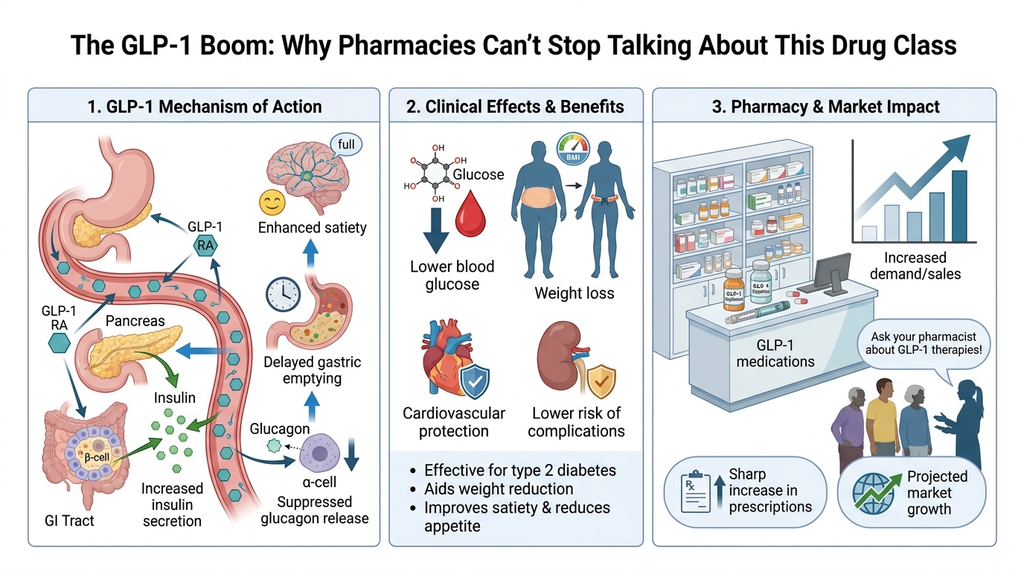
GLP-1 receptor agonists were originally developed to manage type 2 diabetes by helping regulate blood sugar. But their dramatic effect on appetite and weight loss turned them into a household name almost overnight. Now they sit at the center of conversations about obesity treatment, insurance coverage, and even celebrity culture.
What’s New in 2026
The GLP-1 story keeps evolving fast:
- Oral versions have arrived. The first oral formulation of Wegovy entered the market in early 2026, with its highest oral dose performing similarly to the highest dose of the injectable version in clinical studies. That’s a big deal for people who’ve avoided these drugs because of needle aversion or injection logistics.
- New approvals keep expanding the category, with more indication expansions expected as drugmakers explore additional uses.
- Off-label use is spreading. Beyond diabetes and weight loss, GLP-1s are increasingly being used off-label for conditions like sleep apnea, non-alcoholic fatty liver disease, and substance use disorders.
The Cost Conversation
This is where things get complicated. The estimated average annual cost per patient for GLP-1 therapy is around $6,000, and that price tag ripples through the entire healthcare system — from insurance premiums to employer benefit design.
Employers are paying attention too. Surveys show a substantial portion of employees want weight-loss drugs included in their benefits, putting pressure on companies to figure out how (or whether) to cover them.
The Sustainability Question
One of the biggest open questions isn’t whether GLP-1s work — it’s what happens after people stop taking them.
- Studies show many patients regain a large share of the weight they lost after discontinuing GLP-1s, which is pushing providers toward combining medication with lifestyle programs and a clear plan for eventually tapering off.
- Adherence and persistence drop off significantly after the first year in many patient populations, which matters both clinically and financially for anyone planning long-term care.
Why It Matters for Pharmacy as a Whole
GLP-1s aren’t just a single drug story — they’re a preview of bigger shifts happening across the profession:
- Formulary and benefit design are being rewritten around these drugs specifically
- Pharmacist counseling is increasingly focused on managing expectations around weight regain and long-term adherence
- Supply chain and compounding issues have made headlines as demand has occasionally outpaced manufacturing
- Policy makers are watching closely, given the sheer scale of spending involved
The Bottom Line
GLP-1s have gone from a diabetes medication most people had never heard of to arguably the defining pharmacy trend of the decade. Between oral formulations lowering the barrier to entry, off-label uses multiplying, and the cost and sustainability questions still unresolved, this is a story that’s far from over — and one every pharmacist, patient, and employer is going to keep watching closely.