
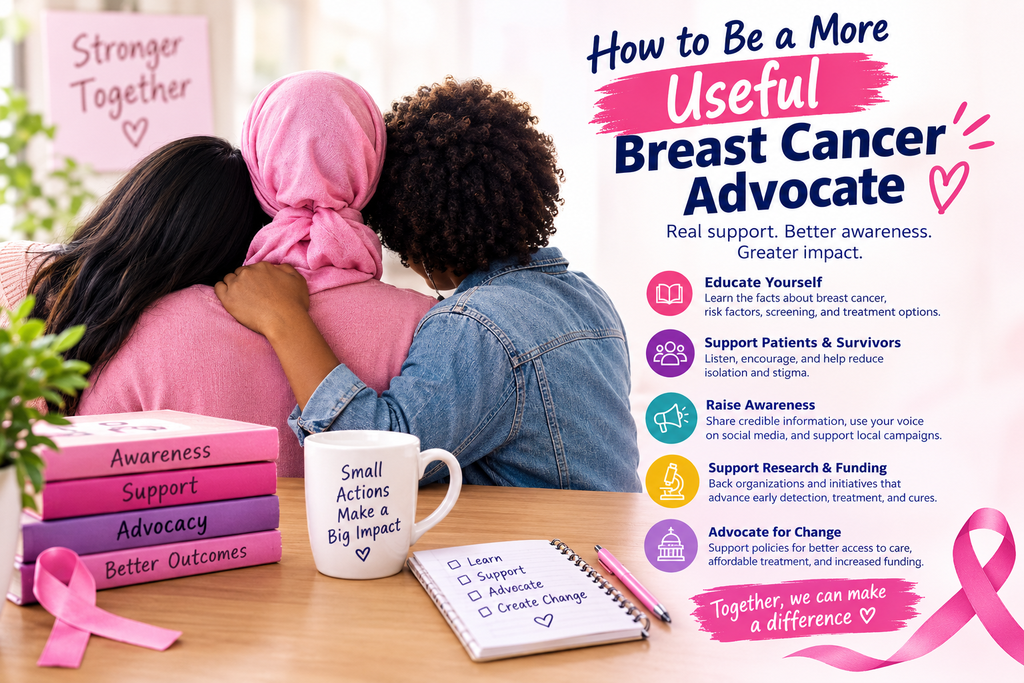
Every October, the world turns pink. Ribbons appear on yogurt lids, sports jerseys, and social media profiles. Awareness matters, but most people already know breast cancer exists. What patients need now is help: earlier detection, affordable treatment, research that leads to cures, and support while they live through it.
The difference between awareness and advocacy is action. Here’s how to move from wearing the ribbon to making a real difference, all year long.
1. Listen before you speak
The most useful advocates center the people living with the disease. Breast cancer isn’t one experience: it differs by subtype, stage, age, race, income, and gender (men get breast cancer too).
- Follow patient voices. Read blogs, join community forums, and follow survivors and people living with metastatic disease. Learn what they say they need.
- Drop the battle language unless they use it. Not everyone wants to be called a “warrior.” People who die of cancer didn’t lose a fight.
- Skip the miracle cures. Don’t share unproven diet or supplement claims. Point people to evidence-based sources and their care team.
- Amplify, don’t speak over. Share patients’ own stories and requests rather than retelling them.
2. Show up with practical help
Advocacy starts close to home. When someone you know is diagnosed, “let me know if you need anything” puts the work back on them. Offer something specific instead.
- Drive them to treatment. Transportation is a real barrier to finishing chemo and radiation.
- Handle the daily stuff. Meals, groceries, childcare, pet care, lawn mowing, or a load of laundry.
- Help with the paperwork. Insurance calls, bills, and appointment scheduling can be exhausting. Offer to sit in on calls or keep notes.
- Keep showing up. Support often fades after the first few weeks, but treatment and recovery last months or years. Put reminders in your calendar to check in.
- Just be normal. Talk about TV shows, gossip, and life. People want to be more than their diagnosis.
3. Give wisely and look past the pink
Not every pink product helps patients. Some “pinkwashing” campaigns donate a tiny share of sales, cap their donations, or sell products with ingredients of questionable safety.
- Ask before you buy pink. How much of my purchase goes to the cause? To which organization? Is there a cap? If the answer isn’t clear, donate directly instead.
- Check the charity. Tools like Charity Navigator and GuideStar (Candid) show how organizations spend their money.
- Know what you’re funding. Decide whether you want to support research, patient assistance (rent, transportation, medication costs), screening programs, or metastatic research, then pick groups that do that work.
- Give monthly if you can. Steady, small donations help organizations plan better than one October gift.
- Donate time and skills. Nonprofits need volunteers, drivers, graphic designers, accountants, and event help.
4. Push for screening, access, and better policy
Some of the biggest gains come from changing systems, not just individual choices. Where you live, your income, and your race still affect how early breast cancer is found and how well it’s treated. Black women, for example, are more likely to die of breast cancer than white women.
- Encourage screening, gently. Remind the women in your life to talk with their doctor about when to start mammograms, especially if they have a family history.
- Share what to watch for. A lump is not the only sign. Skin changes, nipple changes, swelling, or pain are worth getting checked.
- Contact your representatives. Support funding for cancer research and programs that cover screening and diagnostic follow-up for uninsured and underinsured people.
- Back cost protections. Advocate for limits on out-of-pocket costs for follow-up imaging, oral chemotherapy, and other treatments.
- Support clinical trial diversity. Encourage efforts that make trials accessible to more patients, so research reflects everyone it’s meant to help.
5. Don’t forget metastatic breast cancer
Metastatic (stage IV) breast cancer has spread beyond the breast and nearby lymph nodes. It’s treatable but not curable, and it causes nearly all breast cancer deaths. Yet the cheerful “early detection saves lives” message can leave these patients feeling invisible.
- Learn the basics. Metastatic disease can appear years after early-stage treatment, even when someone did everything right.
- Include them in the story. Survivorship campaigns should make room for people living with cancer indefinitely.
- Fund metastatic research. It’s where breakthroughs would save the most lives. Look for organizations that dedicate funding specifically to it.
- Mark October 13. It’s Metastatic Breast Cancer Awareness Day in the US, a good moment to share their stories.
The bottom line
Useful advocacy is less about color and more about commitment. Listen to patients. Help the people near you in concrete ways. Give where it counts. Push for fair access and better policy. And remember everyone, including those living with metastatic disease.
Pick one action from this list and do it this week. Then pick another next month. Breast cancer doesn’t stop on November 1, and neither should we.