
Part One: The Visitor No One Saw
Kofi Mensah was fifty-two, a bus driver who knew every pothole in the city. He felt strong. He laughed loudly, ate his wife Ama’s cooking with joy, and never missed work.
So when the clinic nurse wrapped the cuff around his arm during a routine work check-up and frowned, he chuckled.
“162 over 100,” she said. “Mr. Mensah, your blood pressure is high.”
“But I feel fine!” he protested. “No headache, nothing.”
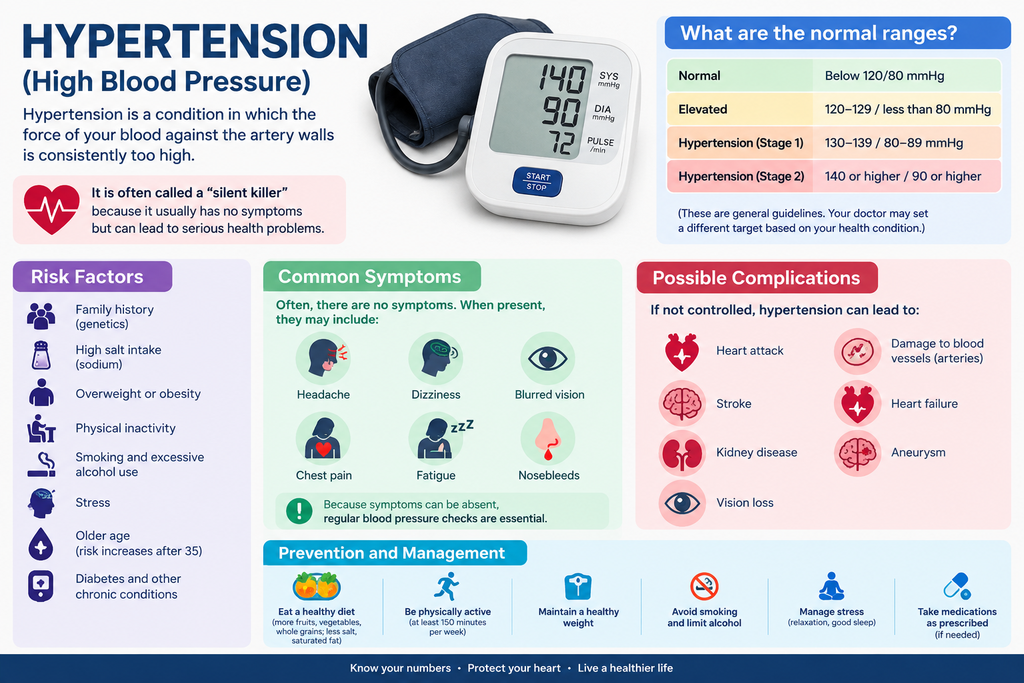
The nurse sat down beside him. “That’s why we call hypertension the silent killer. It doesn’t knock on the door. It walks in quietly and, over years, damages the heart, the brain, the kidneys and the eyes. Many people only find out after a stroke or a heart attack. You’re lucky. We found it early.”
Kofi stopped laughing.
Part Two: Understanding the Enemy
Dr. Adeyemi explained it simply. “Think of your blood vessels as the pipes in a house, and your heart as the pump. When the pressure in the pipes stays too high, the pump works harder and the pipes wear out. Over time they can burst or block.”
She showed him the numbers:
- Normal: below 120/80
- Elevated: 120–129 systolic, with diastolic below 80
- High blood pressure: 130/80 and above
- Emergency: above 180/120, especially with chest pain, severe headache, confusion or weakness. Get help immediately.
“Your goal,” she said, “is to bring it under 130/80. We’ll do it together, with medicine and with changes in how you live.”
Part Three: The Plan
Dr. Adeyemi gave Kofi a plan with two hands.
The first hand: lifestyle.
- Less salt. Most salt hides in processed foods: stock cubes, canned soups, bread, salted fish, fast food. “Taste before you add salt, and read labels.”
- More fruits, vegetables, beans and whole grains, the eating pattern known as the DASH diet. Bananas, leafy greens, and beans are rich in potassium, which helps balance salt.
- Move your body. About 30 minutes of brisk walking most days, around 150 minutes a week.
- Watch your weight. Even losing a few kilograms can lower blood pressure.
- Limit alcohol and stop smoking.
- Manage stress and sleep well.
The second hand: medicine.
She prescribed one tablet every morning. “This medicine works only if you take it every day, even when you feel fine. Especially when you feel fine.”
Part Four: The Slip
For six weeks Kofi did well. Then one busy month, he forgot a few doses. Then he thought, I feel great, maybe I’m cured. He stopped the tablets altogether. The salty snacks at the bus depot crept back.
Three months later, at the depot, his vision blurred and a pounding headache struck. A colleague drove him to the clinic. His reading was 178/110.
Dr. Adeyemi was firm but kind. “Kofi, you didn’t feel better because you were cured. You felt better because the medicine was working. When you stopped, the pressure came back. Hypertension is usually lifelong. It can be controlled, but rarely cured.”
Kofi lowered his head. “I didn’t understand.”
“Then let’s make it easy to remember,” she said.
Part Five: The Turnaround
That evening, Kofi and Ama sat at their kitchen table and made a compliance plan:
- Link the tablet to a daily habit. Kofi kept his medicine next to his toothbrush. Brush teeth, take tablet.
- A weekly pill box. One glance showed whether he’d taken today’s dose.
- A phone alarm at 6:30 every morning.
- A home blood pressure monitor. Kofi checked twice a week and wrote the numbers in a small notebook. Seeing them fall gave him pride.
- Honest talk about side effects. When one tablet made his ankles swell, he didn’t quietly stop it. He told Dr. Adeyemi, who switched him to another medicine.
- Never run out. He refilled his prescription a week before the pills ran out.
- Family support. Ama cooked with less salt, using garlic, ginger, lemon and herbs for flavor. Their son walked with Kofi every evening.
- Keep every appointment, and bring his notebook.
Part Six: One Year Later
A year later, Kofi sat in the same clinic chair. The nurse wrapped the cuff and smiled.
“124 over 78.”
Kofi grinned. He had lost six kilograms, walked every evening, and hadn’t missed a dose in months.
At the depot, he became the man who reminded others. “Get your pressure checked,” he told the younger drivers. “It doesn’t make noise. You’ll feel fine right up until you don’t.”
The Lessons from Kofi’s Story
- Hypertension often has no symptoms. Regular checks are the only way to know.
- Feeling fine doesn’t mean you’re cured. Keep taking your medicine.
- Lifestyle changes and medicine work best together.
- Build routines: pill boxes, alarms, linking doses to daily habits.
- Talk to your health worker about side effects instead of stopping medicine on your own.
- Involve your family. Healthy changes are easier when shared.
- Know the danger signs: severe headache, chest pain, shortness of breath, confusion, weakness on one side or trouble speaking need emergency care.