
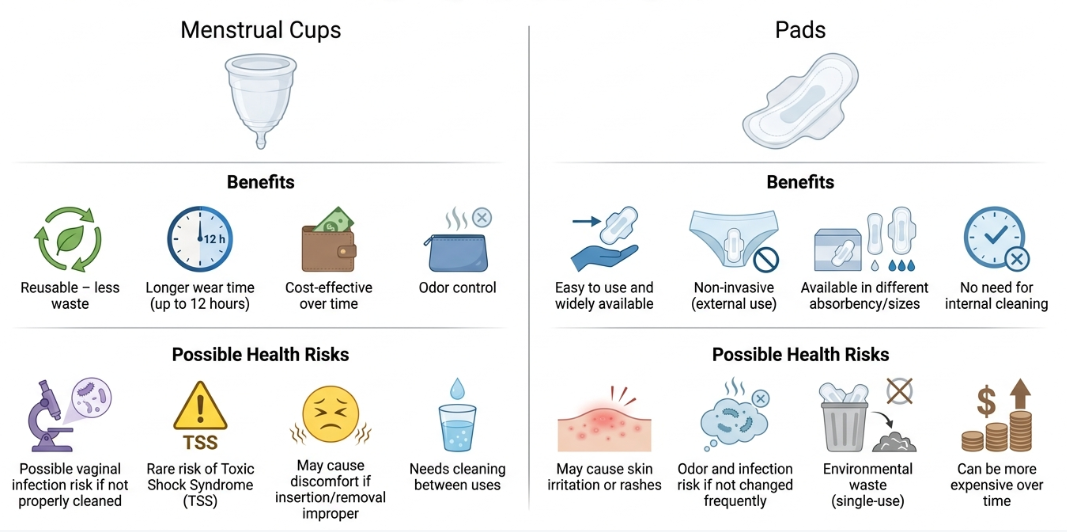
Choosing a menstrual product is personal. Menstrual cups and pads are both generally safe, but they work differently and can affect comfort in different ways. A cup may appeal to someone who experiences pad-related skin irritation, while a pad may be easier for someone who prefers not to insert a product into the vagina. The healthiest choice is one you can use comfortably and hygienically. (www.fda.gov)
What is a menstrual cup?
A menstrual cup is a flexible device inserted into the vagina to collect, rather than absorb, menstrual blood. Cups come in different sizes, shapes, and materials, including silicone and rubber. Some are reusable. Once positioned correctly, a cup is removed, emptied, cleaned, and reinserted according to its instructions. (www.fda.gov)
Potential benefits of a menstrual cup
Less contact with the outer skin. A cup collects blood inside the vagina, so it does not sit against the vulva like a pad. For someone who develops irritation from pad friction or materials, switching to a cup may reduce that particular source of discomfort. A cup can still cause irritation or pain if its material, size, or fit does not suit the user. (www.fda.gov)
Longer intervals between changes. Depending on the product instructions and menstrual flow, a cup may be worn for up to 12 hours. On heavy-flow days, it may need emptying sooner. This can be convenient at work, school, or overnight, provided the cup is used as directed. (www.fda.gov)
Effective leak protection after a learning period. A systematic review of 43 studies involving 3,319 participants concluded that menstrual cups are a safe option for managing periods. Leakage was generally similar to or lower than leakage with other menstrual products in the studies that compared them. Fit and correct placement matter, and some users need time to become comfortable inserting and removing a cup. The researchers also noted that stronger studies are needed. (pubmed.ncbi.nlm.nih.gov)
Lower recurring cost and less disposable waste. A reusable cup can last for years when cared for according to its instructions. This may reduce both repeated purchases and the number of single-use products discarded each month. The initial purchase costs more than a pack of pads, however, and access to clean water is important for washing the cup. (www.fda.gov)
These are practical benefits; a cup should not be described as a treatment for menstrual cramps, infections, or other reproductive health conditions.
What problems can menstrual pads cause?
Pads absorb blood outside the vagina. They are easy to use, require no insertion, and remain a suitable choice for many people. Their main potential health drawback is skin irritation, rather than a general danger from using pads. (www.fda.gov)
A pad worn too long may irritate the vulva. Some people develop itching, redness, burning, or a rash, particularly if they react to scents, deodorants, or other materials in the product. Contact dermatitis associated with sanitary pads has also been described in published clinical reports. These reactions do not happen to everyone, and a rash should not automatically be assumed to be caused by a pad. (www.fda.gov)
To reduce irritation, change pads every few hours and more often during heavy flow. If a scented product seems to bother your skin, try an unscented pad. Stop using a product that repeatedly causes discomfort and speak with a healthcare professional if symptoms persist. (www.fda.gov)
Are menstrual cups risk-free?
No menstrual product is risk-free. A cup that is the wrong size or placed incorrectly may leak or feel uncomfortable. Reusable cups must be cleaned as directed, and handling them requires clean hands. People with a latex sensitivity should choose a suitable non-latex material. If you have an intrauterine device (IUD), ask your healthcare professional about cup use because removal could interfere with its strings or placement. (www.fda.gov)
Serious problems appear uncommon, but cases of toxic shock syndrome have been reported among menstrual cup users. The available evidence does not establish that a cup eliminates this risk or show that every cup has the same risk. Following the product’s wear-time and cleaning instructions is essential. (pubmed.ncbi.nlm.nih.gov)
How to use either product safely
- For cups: Wash your hands before and after handling the cup. Clean it before insertion and after removal as the manufacturer directs. Empty it at the recommended interval, typically every 8 to 12 hours, or sooner when needed. Follow the instructions for cleaning it between periods. (www.fda.gov)
- For pads: Wash your hands when changing a pad. Change it every few hours, including on lighter days, and more frequently if it becomes soaked. Choose a different product if one causes recurring irritation. (www.fda.gov)
- For either product: Contact a healthcare professional if you develop pain, fever, swelling, a persistent rash, or other unusual symptoms. (www.fda.gov)
Which should you choose?
If pads repeatedly irritate your skin, a menstrual cup may be worth trying if you are comfortable using an internal product and have a practical way to clean it. If you prefer a simple external product, pads remain a safe and reasonable choice when changed regularly. You can also use different products on different days of your period.
The key is to pay attention to your body. A menstrual cup is an option with real benefits; a menstrual pad is not inherently dangerous. Comfort, proper use, and timely attention to symptoms matter more than choosing one product for everyone.